


Author: Mr. Lam Wai Chung, STEAM Coordinator; Mr. Lee Wang Chun, Chairperson of the Information Technology Committee; Hong Kong Subsidized Secondary Schools Council.
Access our school’s self-learning platform via the following link:
Developing a Proprietary Platform to Meet School-based Needs
In recent years, Artificial Intelligence has become increasingly popular in the education sector, and our school has actively integrated relevant elements into daily teaching. However, educational tools available on the market may not fully meet specific school-based needs. In view of this, our school’s IT Team developed the “School-based AI Self-Learning Platform” tailored to our school’s context. It aims to integrate AI-assisted teaching materials from all subjects into a unified platform, supporting teachers’ classroom instruction while allowing students to engage in autonomous learning outside of class.
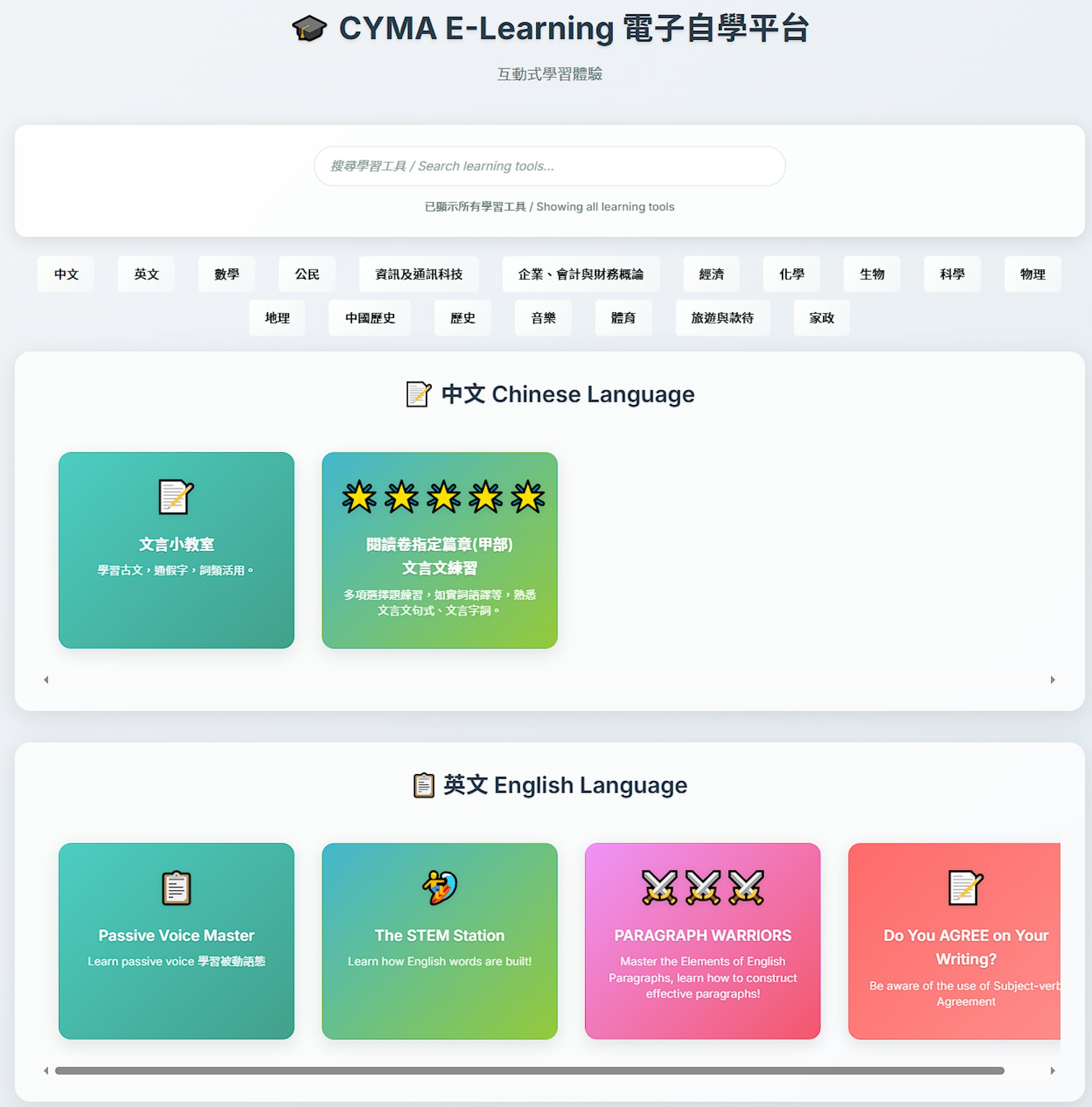
The homepage of our school’s self-developed “School-based AI Self-Learning Platform.” Click here to enter CYMA e-Learning.
Application Examples: Deepening Students’ Higher-order Thinking
The platform was originally established to transform traditional unidirectional knowledge reception into active inquiry, thereby enhancing students’ self-learning efficiency. Our school implements this project through a whole-school participation model, with all subjects producing AI teaching materials for students. Below are examples of applications in specific subjects:
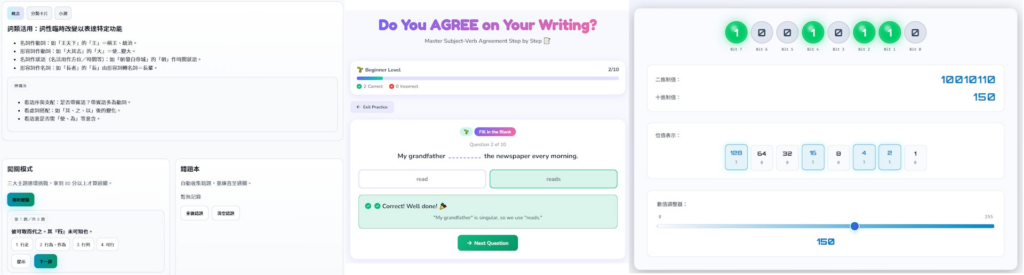
Chinese Language — Classical Chinese Mini-Classroom Designated classical Chinese texts for senior secondary levels are turned into “level-up” games. Through problem-solving, hints, and reward mechanisms, students break away from rote memorization and understand the relationship between content words and function words in a vivid way.
English Language — Voice and Grammar Games The platform provides a “one-stop” learning experience, ranging from basic grammar explanations to interactive tests of varying difficulty. Utilizing a game format and real-time data feedback, it helps students easily overcome the difficulties of learning English grammar.
Information and Communication Technology — Binary Number Visualization Tool Complex computer languages are visualized; by simply moving sliders or clicking buttons, students can instantly see how binary “0s and 1s” are converted into everyday decimal numbers, easily grasping the mysteries of computer operations.
Four-stage Promotion Plan to Foster Professional Exchange Among Departments
The platform has also enhanced the overall teaching efficiency of the faculty and facilitated the sharing of resources and prompts among departments. The school implemented this through four sequential stages:
(1) At the beginning of the school year, the IT Team and the Academic Affairs Team organized AI teaching material workshops.
(2) In the first semester, Subject Heads led pilot runs and evaluated effectiveness.
(3) In the second semester, all teachers integrated frontline teaching experience to create AI materials tailored to each class’s learning progress.
(4) Finally, results were showcased to one another at the end of the term. This strategy successfully fostered a strong atmosphere of exchange regarding the creation of AI teaching tools within the school.
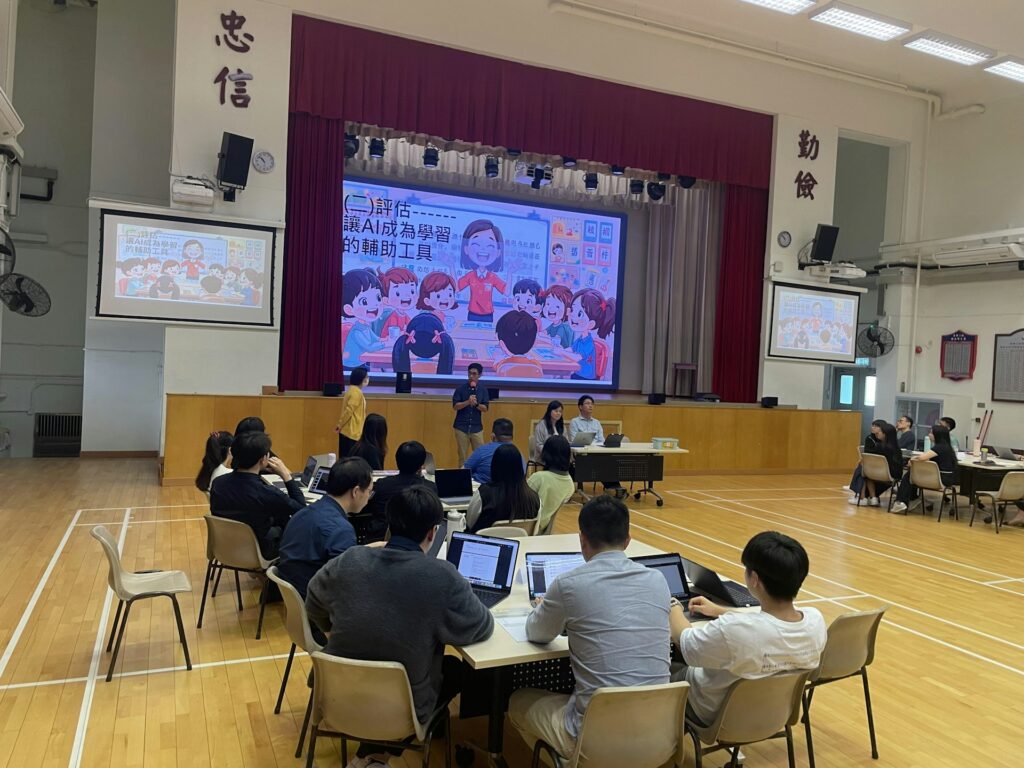
Our school empowers the teaching team through diverse AI teacher development activities.
Uncovering Student Potential to Meet the Future
The school-based AI platform is not only a teaching tool but also an important engine for promoting a paradigm shift in education and encouraging continuous learning. Looking ahead, the school hopes to further utilize platform data to analyze student learning needs, providing more precise, all-round learning support. This allows students to engage in personalized learning according to their own pace, enabling them to master the ability to use information technology for learning and build a spirit of autonomous learning to meet the development needs of 21st-century society.
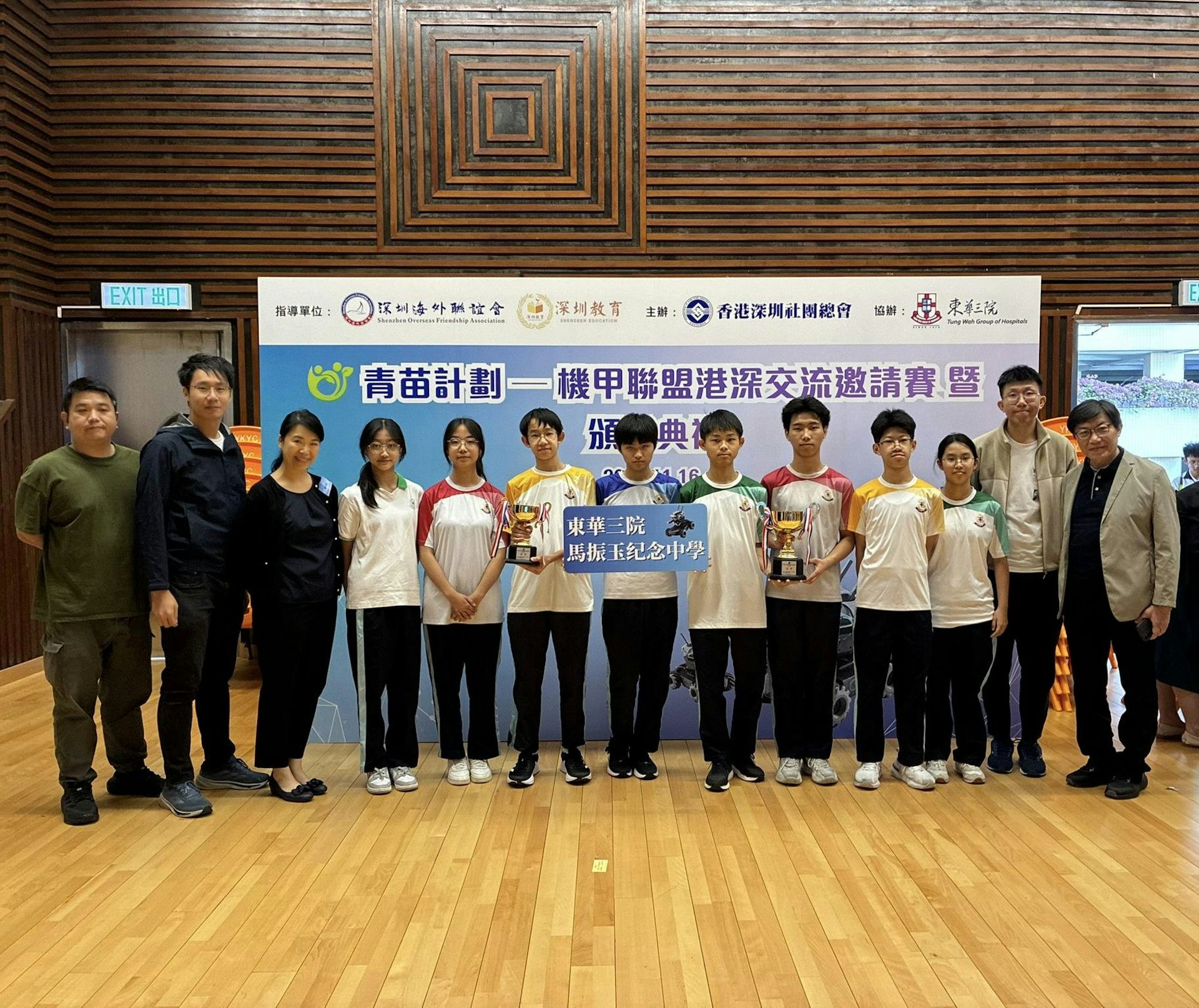
Our students won the Runner-up in the Junior Secondary Category and the Championship in the Senior Secondary Category at this year’s “Youth Plant Project – Mecha League Hong Kong-Shenzhen Exchange Invitational.” Students fully demonstrated their potential by applying knowledge learned in daily classes during the competition.
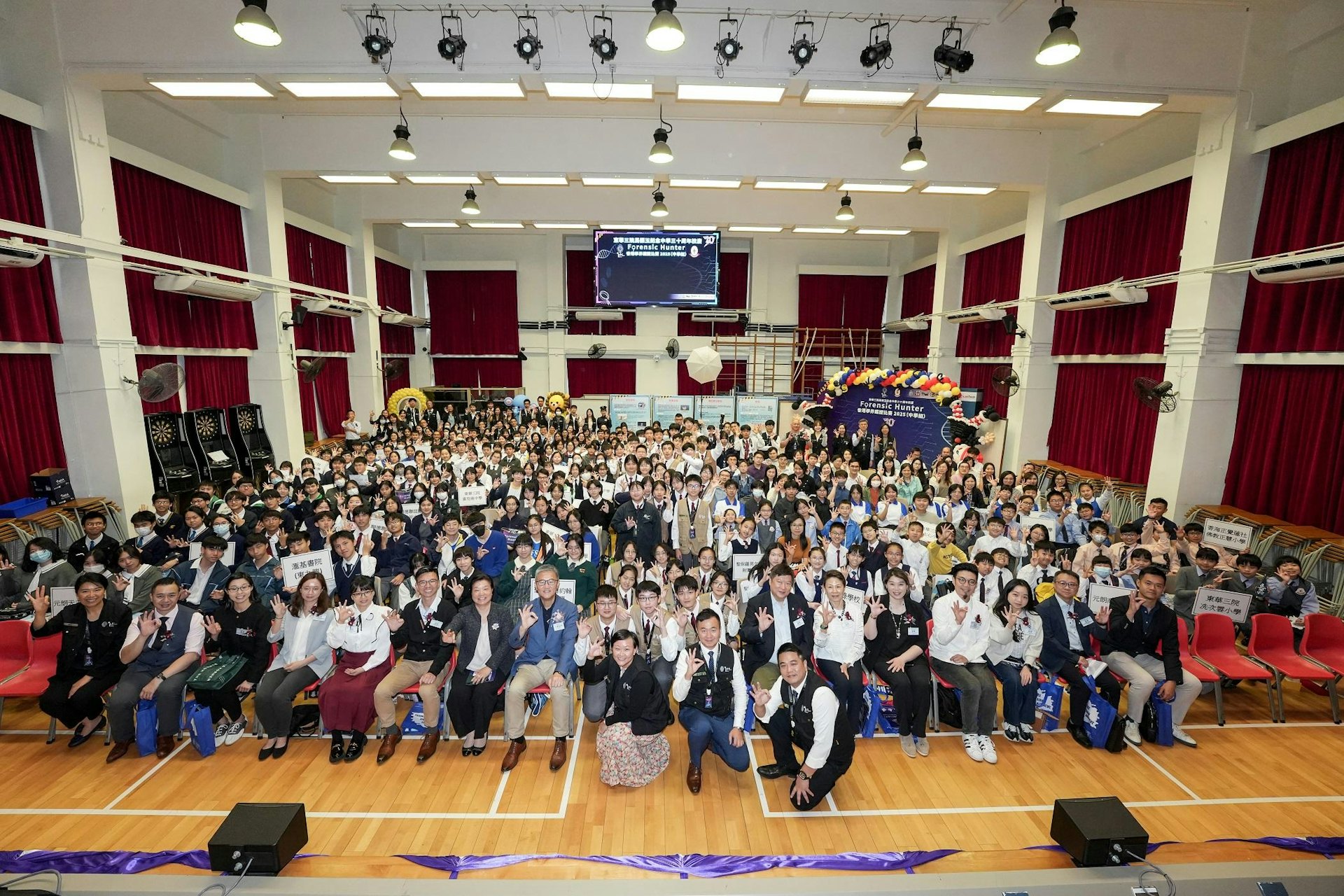
Our school hosts the “Forensic Hunter” Hong Kong Inter-school Forensic Science Competition annually, continuously deepening students’ higher-order thinking through the event.
HK01 Link Version: